The basic rule of wedding seating etiquette: the closer someone is to you, the closer they sit to you. Parents and grandparents sit nearest the top table, then close family, then friends. Plus-ones always sit with their partner, every guest should know at least two people at their table, and anyone who doesn't get on goes to different tables, out of each other's line of sight.
Most seating etiquette isn't about tradition. It's about making sure nobody spends four hours at a table where they're miserable. If a rule below doesn't fit your family, break it. Just break it on purpose.
If you haven't started your plan yet, our step-by-step seating plan guide covers the order to do it in, and the free seating plan maker lets you drag people around until it works.
Who sits closest to the couple?
Work outwards from the top table:
- Parents and grandparents, at the top table or the tables nearest it
- Close family: siblings who aren't in the wedding party, aunts, uncles, godparents
- Close friends
- Everyone else: extended family, colleagues, family friends, plus-ones you've just met
Guests notice where they're seated relative to the top table. Your grandmother at the back by the door will be remembered.
Parents
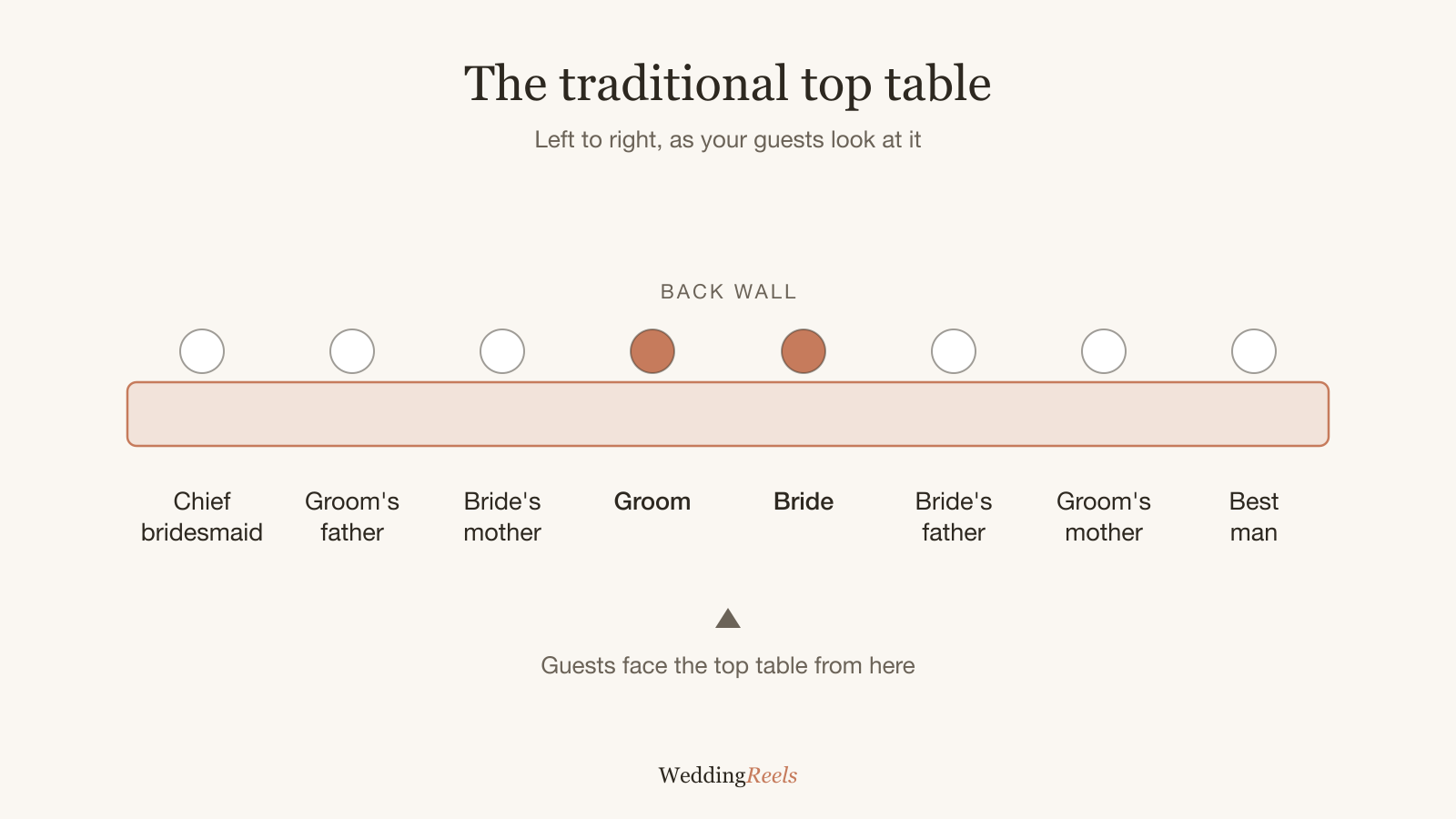
Traditionally, parents sit on the top table. Many couples now give each set of parents their own table near the front, which lets them sit with their own siblings and friends and host their side of the family. Both work. Ask your parents which they'd prefer, because some love the top table and others would rather be with their people.
Divorced or separated parents
This is the question couples ask most. A few options that work:
- Give each parent their own table, equally close to the top table. Each one hosts their own family and partner. This is usually the kindest choice.
- Keep them both on the top table, but not side by side, with you in between.
- Skip a top table and have a sweetheart table for just the two of you, which removes the problem entirely.
Whatever you choose, tell both parents before the day. Nobody should find out where they're sitting from the board at the entrance.
Grandparents and older guests
Seat them near the front, so they can see and hear the speeches, but away from the speakers and the dance floor. Close to the toilets and away from draughty doors helps too. If they use a wheelchair or walking frame, check the route from the door to their table is clear.
Plus-ones and new partners
A plus-one sits with the person who brought them. Always. Then seat the pair at a table where the guest knows people, so their partner isn't stuck making small talk with strangers all night.
Children
- Babies and toddlers sit with their parents, ideally near an exit for quick escapes.
- A kids' table works for children old enough to sit without a parent, roughly eight and up, ideally with an older cousin or teenager at the table and their parents close by.
- Teenagers are usually happier at a table of their own than with their parents.
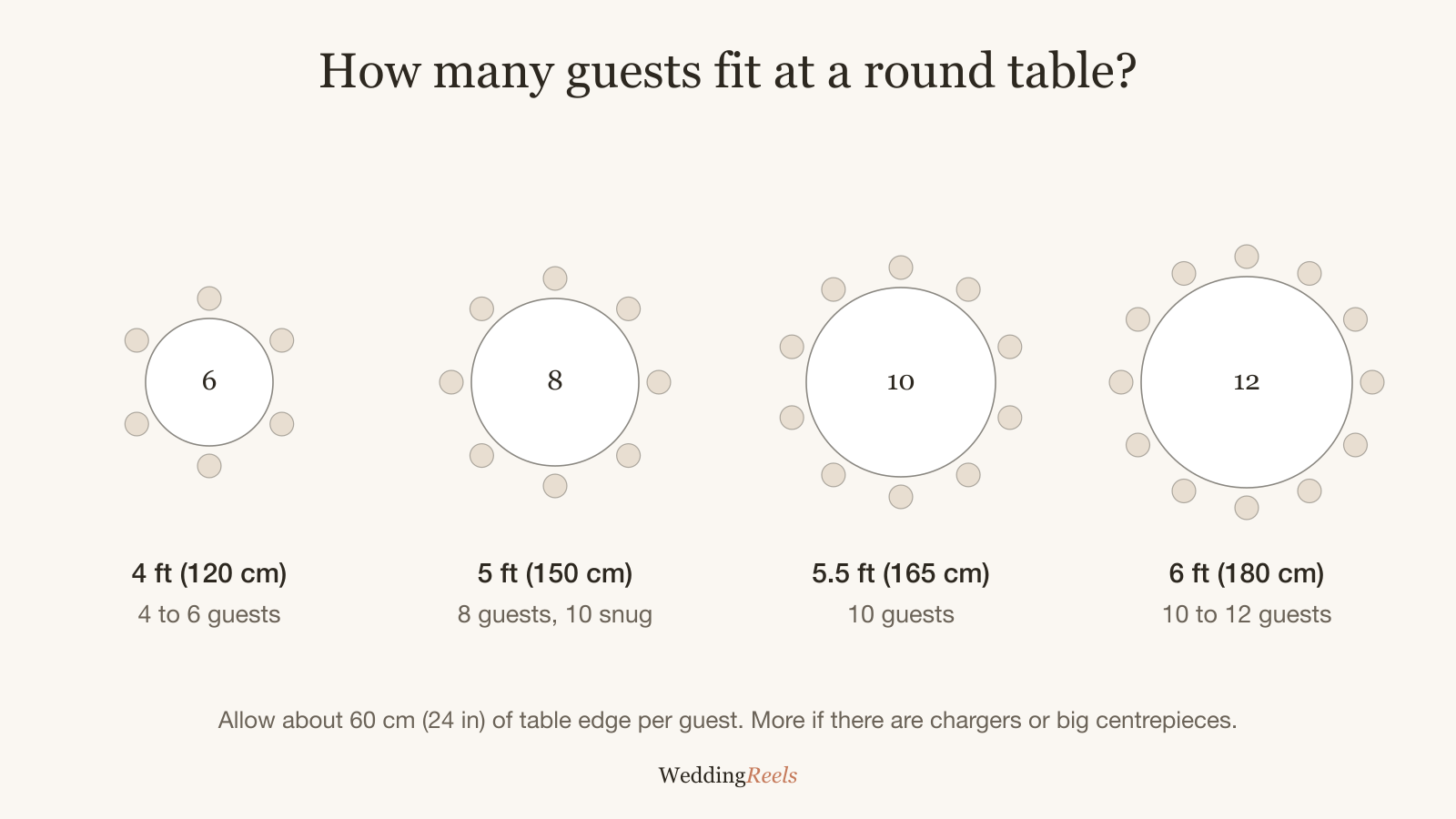
- High chairs take space. Count each one as a seat when you plan the table.
Single guests
Skip the "singles table". It's obvious to everyone sitting at it. Seat single friends at tables where they know people, mixed in with couples. If you'd like to introduce two people, put them at the same table, not next to each other.
Guests who don't get on
Exes, family members who've fallen out, friends after a bad break-up. Put them at different tables and, where you can, on opposite sides of the room so they aren't facing each other all evening. You don't need to explain why. Your venue coordinator might appreciate a quiet word, though.
Colleagues and your boss
Seat colleagues together where you can. They'll mostly know each other, and that's an easy table. If your boss is coming, put them with colleagues or family friends near the middle of the room, not at the back.
Your suppliers
Photographers, videographers and planners who stay through dinner usually need a seat and a meal. Many prefer a small table near the edge of the room, where they can get up quickly when the speeches start. Ask them.
Should you assign tables or seats?
Assigning tables is enough for most weddings. Guests pick their own seats, which is less work for you and gives people a little freedom.
Assign individual seats (with place cards) if you're having a formal dinner, if meal choices are served to specific seats, or if there's someone at a table you want to keep apart. If you do, alternate couples rather than seating every couple side by side, so conversation crosses the table.
What if someone asks to move?
Before the wedding, listen. Sometimes there's a good reason you didn't know about. On the day, have a firm, friendly answer ready ("the caterers have the plan, so we're keeping it as it is") and ask your venue coordinator to handle any swaps quietly. Don't spend your reception redoing the plan.
A quick etiquette checklist
- Parents and grandparents near the front
- Plus-ones with their partner
- Everyone knows at least two people at their table
- No singles table
- People who don't get on at different tables
- Older guests away from the speakers
- Babies near an exit
- Both sets of parents have seen the plan before you print