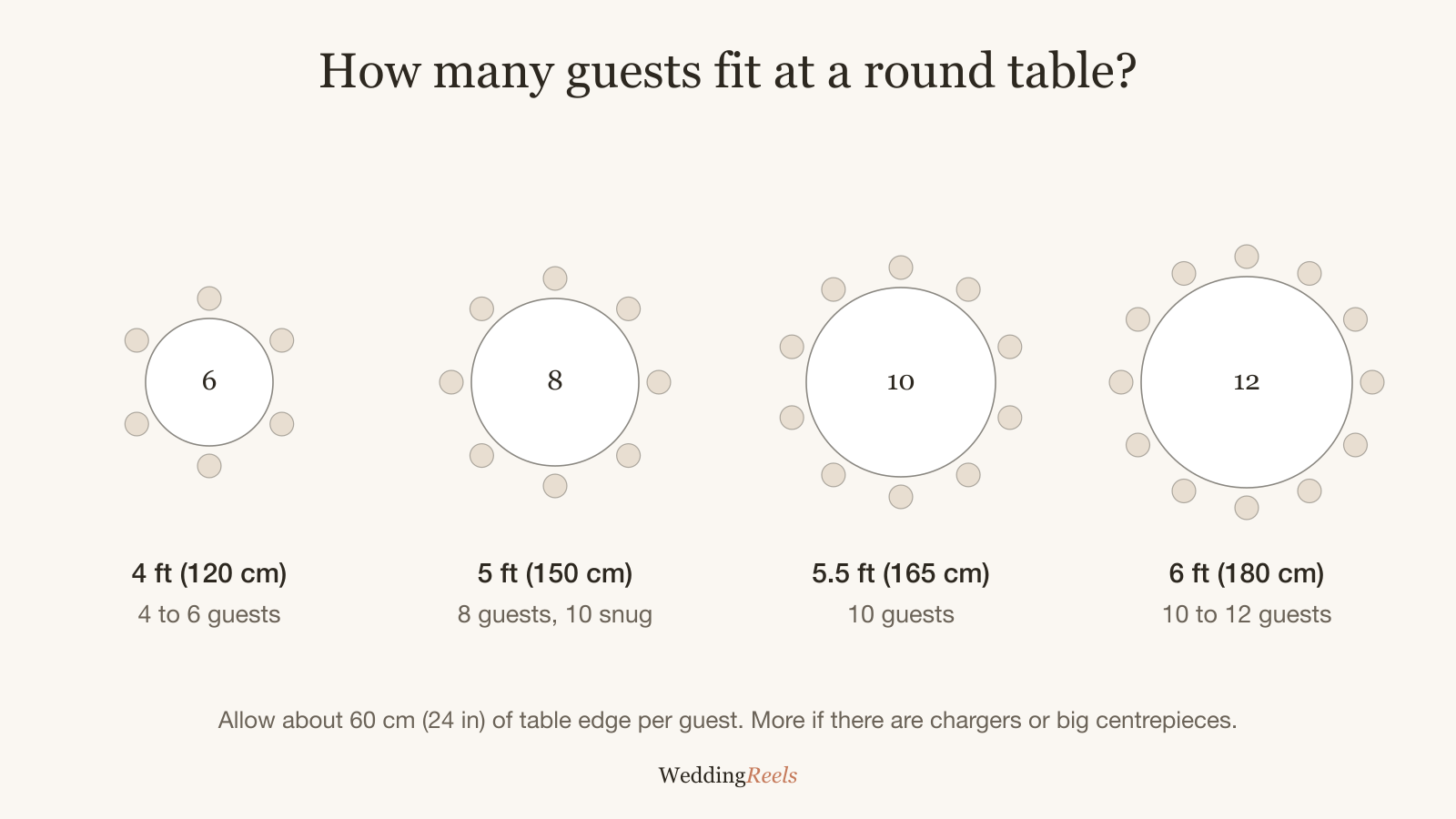
A 5 ft (150 cm) round wedding table seats 8 guests comfortably, or 10 if snug. A 6 ft (180 cm) round seats 10 to 12. A 6 ft long table seats 6 to 8, and an 8 ft long table seats 8 to 10. The usual guide is about 60 cm (24 in) of table edge per guest, a little more if you have chargers or big centrepieces.
Before you start your seating plan, ask your venue which tables they have. The table size decides how many tables you need, how much of the room they take up and how easy the seating plan will be.
Round table sizes
| Round table | Diameter | Guests |
|---|---|---|
| 4 ft | 120 cm | 4 to 6 |
| 5 ft | 150 cm | 8, or 10 if snug |
| 5.5 ft | 165 cm | 10 |
| 6 ft | 180 cm | 10 to 12 |
The 5 ft and 5.5 ft rounds are the most common at UK and South African venues. In the US, the standard banquet round is 60 in (5 ft), usually set for 8 to 10.
"Snug" is fine for a buffet or a family-style meal. For a plated dinner with full place settings, glasses and a centrepiece, use the lower number.
Long table sizes
| Long table | Length | Guests |
|---|---|---|
| 6 ft | 180 cm | 6 to 8 |
| 8 ft | 240 cm | 8 to 10 |
| Two 6 ft tables end to end | 360 cm | 12 to 14 |
The higher numbers include a guest at each end. Long tables are often pushed together into one long row for a "banquet" look. Each join loses a little space to the table legs, so count seats along the sides rather than adding up individual tables.
Square tables
A 3 ft (90 cm) square seats 4. A 5 ft (150 cm) square seats 8, two on each side. Squares are less common at weddings but useful for filling the corners of a room.
How many tables do you need?
Take your guest count, subtract the top table, and divide by the seats per table. Always round up.
Example: 120 guests, an 8-person top table and 10-seat rounds. 120 − 8 = 112 guests. 112 ÷ 10 = 11.2, so you need 12 tables.
That leaves a few empty seats, which is a good thing. Planning every table at the maximum leaves you no room for a late RSVP or a table of friends that won't split. Aim for one spare seat on a few tables.
Odd numbers are fine
Tables don't need an even number of guests. A table of 9 is better than splitting a group of friends to make 10. Couples should sit together, but nobody will notice an empty chair, especially if the venue removes it before guests sit down.
How much room do you need?
For a seated dinner with round tables, allow roughly 1 to 1.2 m² (10 to 12 sq ft) per guest for the dining area. On top of that, add space for:
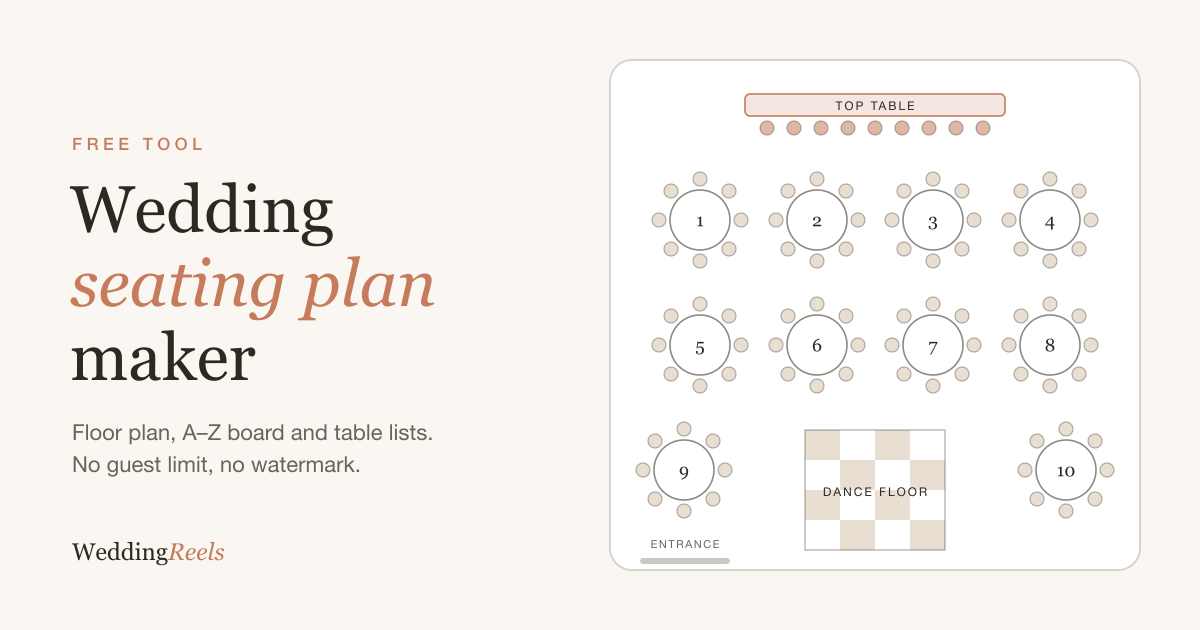
- The dance floor. For 100 guests, a floor of about 5 × 5 m (16 × 16 ft) is comfortable, since not everyone dances at once.
- The bar, buffet and cake table
- The top table, which needs about 60 to 75 cm per person along its length
Leave about 1.5 m (5 ft) between table edges. That's enough for chairs to push back with someone still able to walk behind them. Less than that and waiting staff can't get through with plates.
Round or long tables?
Round tables are the classic choice. Everyone can talk to everyone, and they're easy to group by friends and family.
Long tables fit more guests into a narrow room, feel more like a family dinner and photograph well. But guests can only really talk to the people beside and opposite them, so the seating plan matters more.
Many weddings mix both: long tables for the wedding party or big family groups, and rounds for everyone else.
Don't forget
- High chairs and booster seats count as a seat.
- Wheelchair users need an open space, not a chair removed from a tight spot. Put them on the end of a long table or with clear room at a round.
- Big centrepieces take space. Tall arrangements also stop people talking across the table.
- Your suppliers may need a table. Photographers and videographers often eat during dinner.
Once you know your table sizes, you can drag them onto a floor plan in our free wedding seating plan maker. It adds round, long, square and sweetheart tables, and you can set up all your tables in one go. Then follow our step-by-step seating plan guide to fill them.